Free worldwide shipping on orders over $50

Are Freshwater Pearls Real? A Simple Buyer’s Guide

Are Freshwater Pearls Real?
Yes, freshwater pearls are real pearls.
What Are Freshwater Pearls?
Freshwater pearls are real pearls that grow inside freshwater mussels, usually in lakes, rivers, and ponds. Most freshwater pearls on the market today are cultured pearls, which means pearl farmers help start the pearl-growing process, but the pearl still forms naturally inside the mussel.
Unlike imitation pearls, freshwater pearls are made of nacre, the same natural pearl material that gives them their soft glow and smooth surface. They can come in many shapes, sizes, and colors, from classic white round pearls to pink, lavender, and baroque styles.
Because freshwater mussels can often produce more pearls than saltwater oysters, freshwater pearls are usually more affordable. This makes them a popular choice for everyday pearl jewelry, including necklaces, earrings, bracelets, and rings.
Are Cultured Freshwater Pearls Fake?
No, cultured freshwater pearls are not fake. They are real pearls grown inside freshwater mussels with help from pearl farmers. The word “cultured” simply means that humans start the pearl-growing process, but the pearl itself still forms naturally inside the mussel.
This is different from imitation pearls, which are usually made from glass, plastic, or coated beads. Cultured freshwater pearls are made of real nacre, the natural material that gives pearls their soft shine and depth.
In fact, most real pearls sold today are cultured pearls, including freshwater pearls, Akoya pearls, Tahitian pearls, and South Sea pearls. So if you see the term “cultured freshwater pearl,” it does not mean the pearl is fake. It means it is a real pearl created through a controlled farming process.
Freshwater Pearls vs Fake Pearls
Freshwater pearls are real pearls made of nacre, the natural material produced by freshwater mussels. Most are cultured, meaning pearl farmers help begin the pearl-growing process, but the pearl develops inside the mussel.
Fake pearls, also called imitation pearls, are made from materials such as glass, plastic, ceramic, or coated beads. They may look similar to real pearls, but they do not contain natural nacre.
Here are some common differences:
| Feature | Freshwater Pearls | Fake Pearls |
|---|---|---|
| Material | Natural nacre | Glass, plastic, or coated beads |
| Appearance | Soft, deep luster | Often overly shiny or flat-looking |
| Surface | May have small natural imperfections | Usually perfectly uniform |
| Shape | Round, oval, button, or baroque | Often identical in shape |
| Price | Varies by quality | Usually less expensive |
| Durability | Can last for many years with proper care | Coating may peel or wear away |
A low price does not automatically mean a pearl is fake. Freshwater pearls are often more affordable because they are widely cultured and can be produced in larger quantities. When buying, check the product description for terms such as freshwater cultured pearl, ask about the pearl material, and choose a trustworthy seller. Home tests can offer clues, but professional testing is the most reliable way to confirm authenticity.If you are ready to buy, you can also learn how to choose freshwater pearl jewelry for everyday wear.
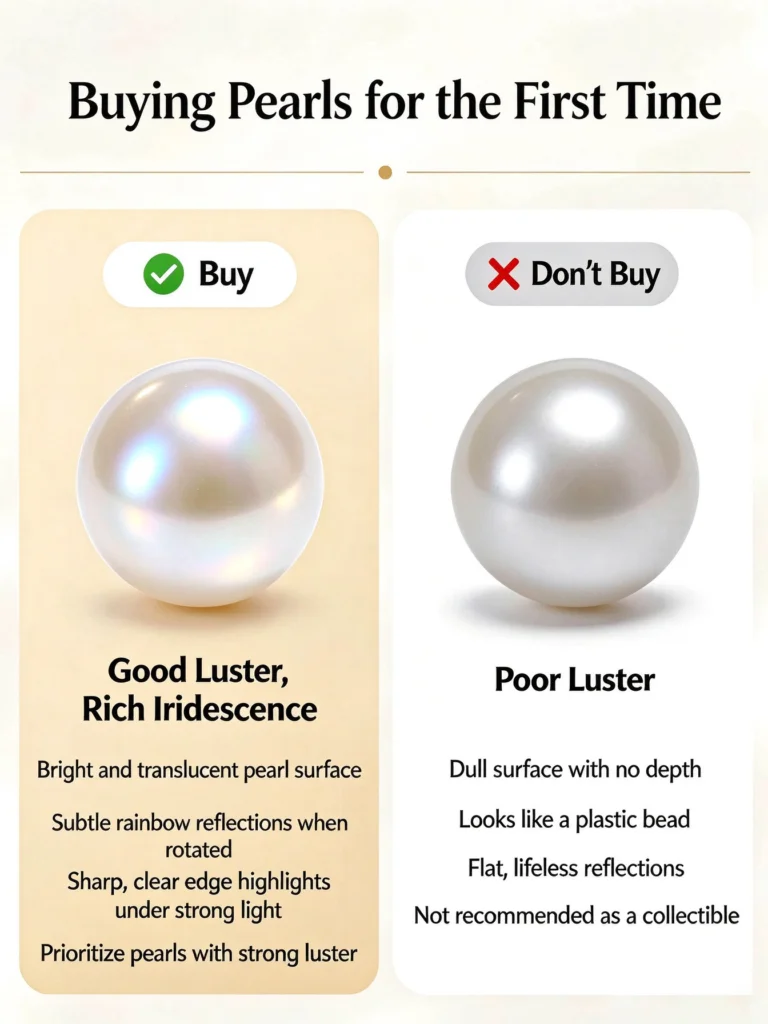
After checking the luster, it is also helpful to choose the right pearl size for your necklace, earrings, or bracelet.
How to Tell If Freshwater Pearls Are Real at Home
1. Gently Rub the Pearl
Real freshwater pearls:
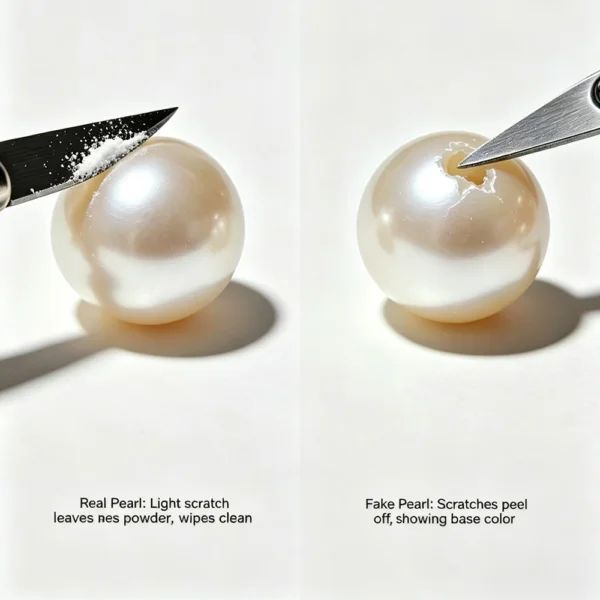
When gently rubbed, real pearls may feel slightly gritty because of their natural nacre surface.
Fake pearls:
Fake pearls often feel very smooth or glassy, and coated imitation pearls may lose their surface coating if scratched too hard.
2. Check with Short Heat Exposure
Real freshwater pearls:
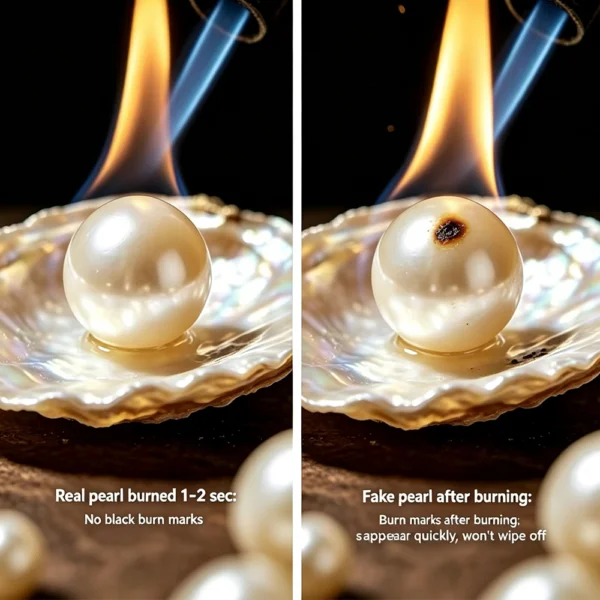
Real pearls are less likely to turn black immediately under very brief heat exposure, but this method can still damage the pearl.
Fake pearls:
Plastic or coated imitation pearls may darken, melt, or give off an unpleasant smell when exposed to heat.
Note: This method is not recommended for new jewelry.
3. Inspect the Drill Hole
Real freshwater pearls:
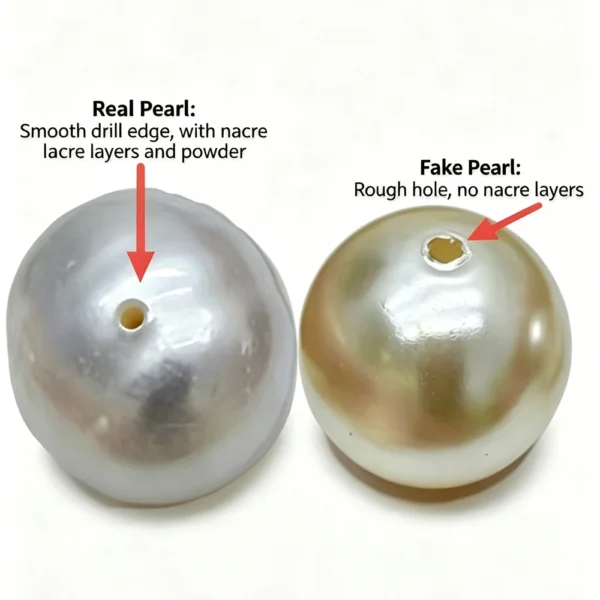
Around the drill hole, you may see natural nacre layers or fine powder-like texture. The edge usually looks more natural.
Fake pearls:
Fake pearls may show peeling coating, rough edges, or a glass/plastic core near the hole.
4. Use a Flashlight
Real freshwater pearls:
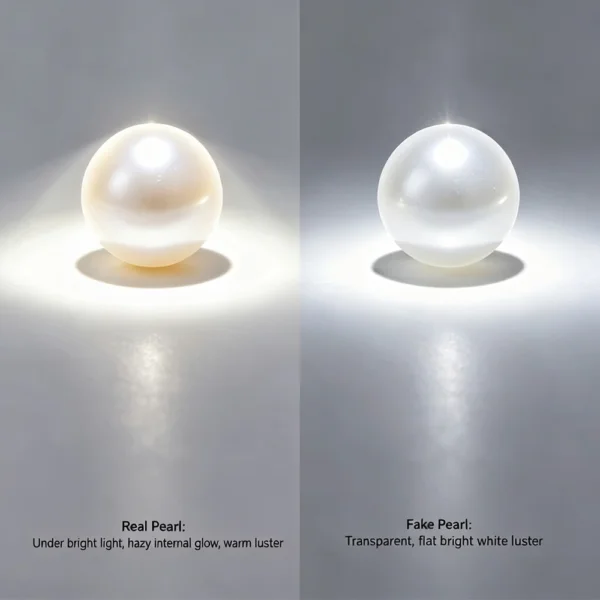
Under strong light, real freshwater pearls are usually not fully transparent. They may show a soft inner glow and natural growth texture.
Fake pearls:
Fake pearls may look too white, too transparent, or flat, with light passing through evenly and little depth.
Safety Tip
These at-home checks can give you clues, but they are not 100% accurate. Avoid scratching, burning, or damaging new pearls. For expensive pearl jewelry, professional testing is the safest choice.Because pearls are delicate, it is important to care for pearl jewelry properly after testing or wearing it.
Should You Buy Freshwater Pearls?
Yes, freshwater pearls are a great choice if you want real pearl jewelry that is beautiful, wearable, and more affordable than many saltwater pearls. They offer a soft natural luster and come in many shapes, sizes, and colors, making them easy to match with different styles.
Freshwater pearls are especially suitable for everyday jewelry, such as pearl necklaces, earrings, bracelets, and rings. They can look elegant with formal outfits but still feel simple enough for daily wear.
When buying freshwater pearls, pay attention to luster, surface quality, shape, size, and the seller’s description. Look for terms like real freshwater pearls or freshwater cultured pearls, and avoid listings that only say imitation, simulated, or pearl-like.
If you want genuine pearls at a reasonable price, freshwater pearls are definitely worth considering.